Seed Swaraj for Tribal Communities
Published on May 16, 2026
Summary
Indian tribal communities face worsening conditions due to modern agricultural shifts away from traditional practices. The Community Managed Seed System (CMSS) is proposed as a solution to restore self-sufficiency, food security, and control over local seeds.
Seed Swaraj for Tribal Communities
Background
Almost one tenth of population in India belongs to tribal community. Traditionally, the tribal community have been most independent and self-sufficient (Atamanirbhar) community. They have been traditionally dependent on forests for their food, shelter and other essential needs. As there had been abundant rainfall and sufficient vegetation in tribal regions, the tribal community were self-sufficient in terms of food and nutrition.
Over a period of last few decades, where the country has progressed in terms of food security, nutrition, health care, agricultural productivity and per capita income, the tribal community has not progressed at the same pace. Rather, it seems that their condition has worsened on many accounts. For example, the prevalence of malnutrition among children and women is highest in tribal areas; highest distress migration (more than 70% tribal families have at least one person migrating as daily wage labour); high level of illiteracy; high infant mortality rate & maternal mortality rates in tribal region.
Majority of families (80.52%) have land holding less than 4 ha, including various types such as cultivated, cultivable-waste, pastures, revenue wasteland resulting in not enough food. Further, most of the small and marginal farmers are concentrated in fragile regions of the South-East and Southern Rajasthan, which are also predominantly habitats of tribal communities. Though there are various reasons for the problems and backwardness that tribal are in today but one of the major reasons seems to be 'the change in agricultural practices' that they have gone through. Most of the land belonging to smallholders in Aravalli hills is sloping, having thin soil zone, and high erosion rate. These are mostly the regions occupied by rainfed farming, facing climate change-induced extreme events of precipitations and drought further exaggerate wind and water erosion. Most small and marginal families cultivate and concentrate their efforts on 20-25% of the land. They are traditionally farming focused on the cultivation of food grains and vegetable supply for family purposes. Thus, most of the rainfed dependent farmers mainly followed subsistence farming.
Farmers below the category of semi-medium (2-4 ha), small (1-2 ha), marginal (< 1ha) do not have sufficient resources and appropriate knowledge and skills to grow diverse and high-value crops¹. Simultaneously, the remaining area remains unattended as they do not have adequate resources and suitable technological know-how for proper utilization such as Agro-Horti-forestry. Some of the critical factors affecting their livelihood are sloping land, poor government investment, low capacity for investment, extreme precipitation resulting in soil-erosion, low water holding capacity of land resulting in small production. The low productivity of land leads to low income. Adopting market-based agriculture's linear approach with high input costs makes them more vulnerable, particularly in climate change.
The agriculture policy which is largely influenced by 'Green Revolution Technologies' has unintentionally replaced the robust 'integrated farming system' practiced traditionally by the tribal. The green revolution policy focus on high yielding crops through application of chemical fertilisers & pesticides is, no doubt, a successful case which has helped India to obtain food sufficiency, better agricultural productivity and higher income of farmers; but it has been successful only in plain areas. The hilly areas where most tribal live have not benefitted the green revolution technologies and agricultural policies and have been impacted by them in a unique way. As the green revolution technologies are promoted, the traditional integrated farming system which was in practice in tribal regions in India, has come under threat. As a result, farmers are not able to grow sufficient food for their survival and large number of them are forced to migrate to urban areas to seek wage labour.
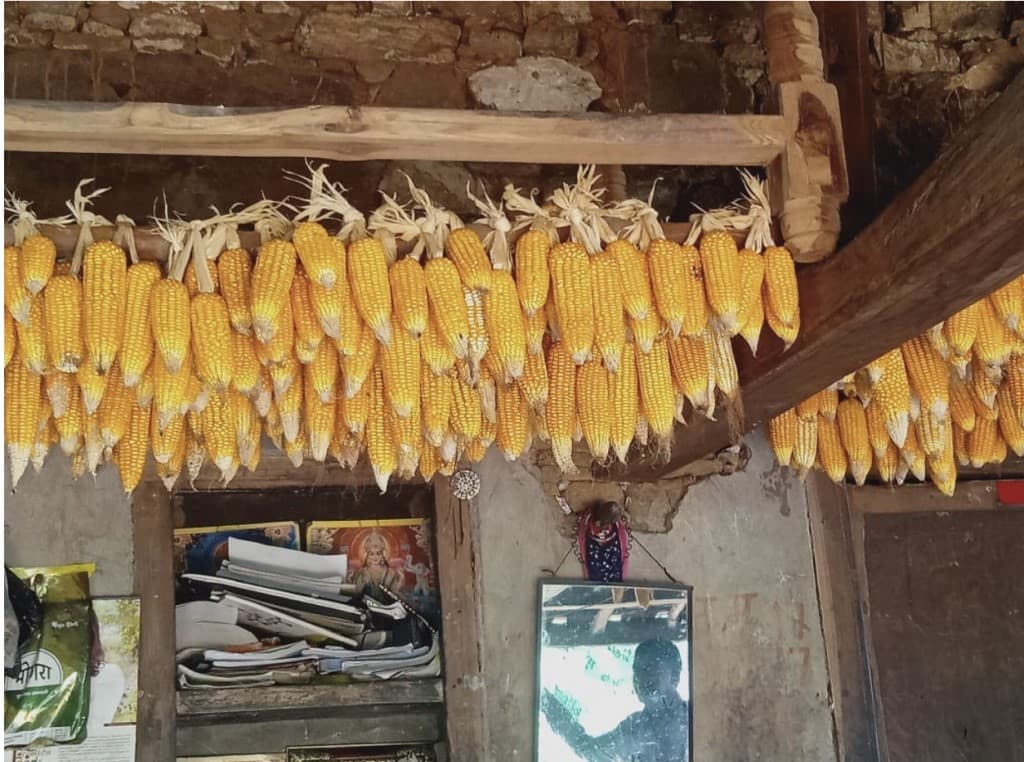
Most of the tribal farmers have stopped cultivating the traditional, indigenous and nutritious crops like millets, local rice, and so on because they have been sold dreams of getting rich by cultivating soya, wheat or cotton. The seeds of traditional crops are no more available while of the newly introduced crops are aggressively marketed by multinational companies as well by the government, which has increased the dependency of tribal communities on markets for these seeds. High input cost in crops like soyabean, cotton and wheat put the tribal farmers at higher risks. As a result, most tribal prefers to work as wage labour moving away from agriculture, which raises other indirect consequences.
Due to such situations, the nutritional status of people in tribal area especially among children and women is grim. If the situation continued, it will not only lead to unrest among tribal but even the urban areas are going to be under stress due to high migration of tribal. The solution of these problems lies in the Gandhian Philosophy of Swaraj- where the tribal are enabled and become self-sufficient for their food and nutritional needs; their children are able to get education and lead a productive life.
The Community Managed Seed System (CMSS) is a possible solution for such problems, wherein farmers not only grow but also store and sell seeds at local level. This approach is a step towards decentralized seed system for rainfed farming, which is managed by farmers' organization and agriculture departments in partnership.
Community participation in maintaining local genetic diversity provides pride to farmers and sense of belonging for local land races. This system is run, maintained and promoted by farmers to facilitate good quality seeds and input. CMSS are trying to regain, maintain, and increase control over seeds by farmers and local communities and to strengthen or establish dynamic forms of cooperation among and between farmers and others involved in the conservation and sustainable use of agricultural biodiversity.
Advantages of CMSS
- Timely availability of quality seeds to farmers well ahead of the season, at affordable prices and assured quality. (as the seeds are produced in same climate, they have better performance).
- Help generate revenue to local farmers and local labor (for cleaning, storage and transportation).
- Development of a large-scale base of seed producers with necessary technical skills through the internalized/localized seed market; this also helps to internalize wages and incomes in seed processing within the villages.
- Reduces the burden of large-scale procurement, transport and other related costs; this also reduced the carbon footprint of seed operations.
- Substantial reduction in transaction costs in seed production and distribution for the department.
- Establishment of a platform for collaboration, knowledge sharing, etc. among community organisations, facilitating organisations, research system and the department.