Soils: The Key to Mitigating and Adapting to Climate Change
Published on May 16, 2026
Summary
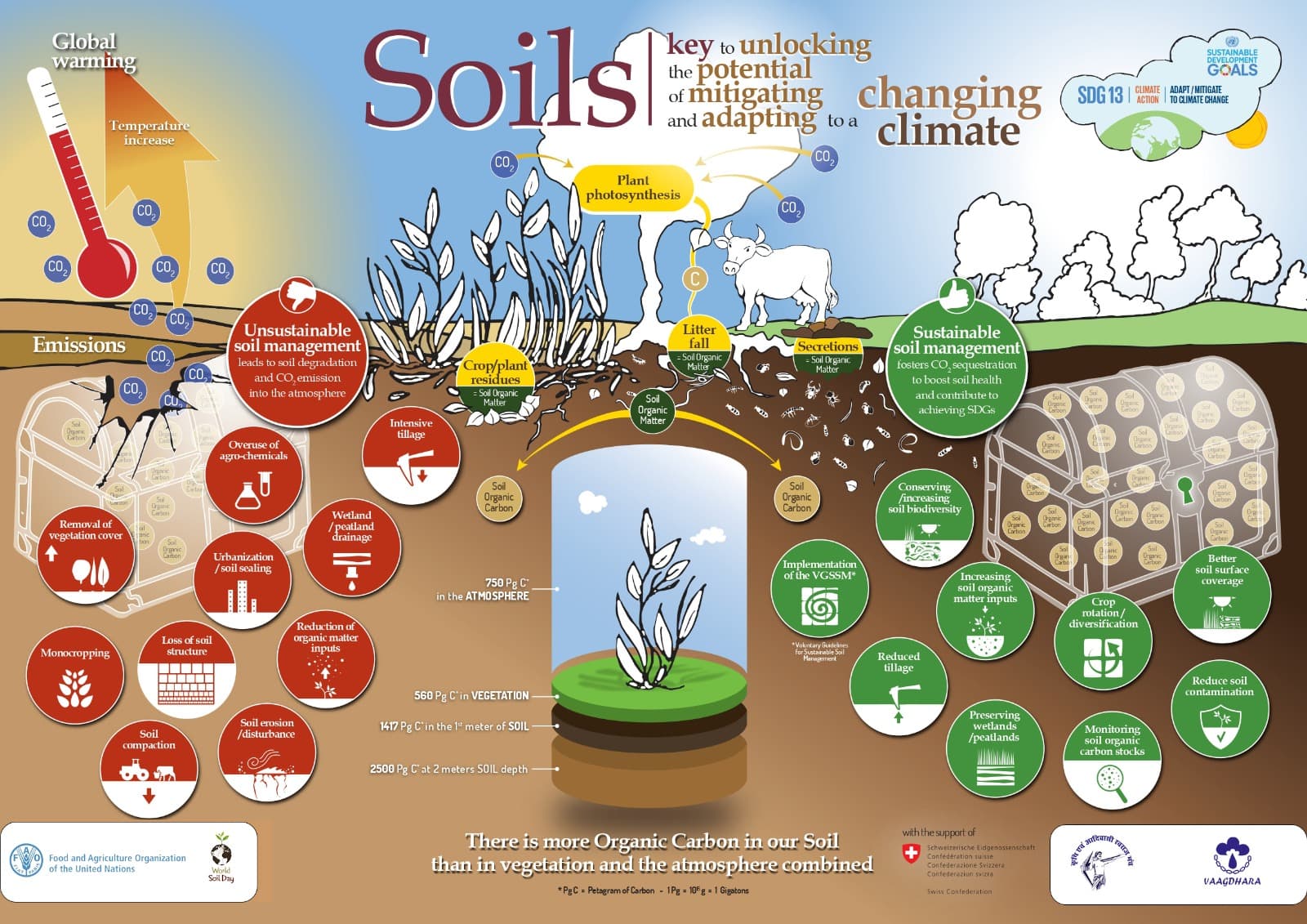
This infographic explains how unsustainable soil management releases CO2, exacerbating climate change. Conversely, sustainable practices can sequester vast amounts of carbon in the soil, more than in the atmosphere and vegetation combined, offering a key solution for climate mitigation.
Soils: key to unlocking the potential of mitigating and adapting to a changing climate
Global warming
Temperature increase is leading to global warming. This is associated with CO₂ emissions into the atmosphere.
Unsustainable soil management
Unsustainable soil management leads to soil degradation and CO₂ emission into the atmosphere. This releases Soil Organic Carbon.
Practices contributing to this include:
- Removal of vegetation cover
- Monocropping
- Soil compaction
- Overuse of agro-chemicals
- Urbanization / soil sealing
- Loss of soil structure
- Soil erosion / disturbance
- Intensive tillage
- Wetland / peatland drainage
- Reduction of organic matter inputs
The Role of Soils in the Carbon Cycle
Plants absorb CO₂ through Plant photosynthesis. When plants and animals die, their remains contribute to the soil.
- Crop/plant residues become Soil Organic Matter.
- Litter fall becomes Soil Organic Matter.
- Secretions from soil organisms become Soil Organic Matter.
Soil Organic Matter is then converted into Soil Organic Carbon.
Carbon Storage: Atmosphere vs. Vegetation vs. Soil
A comparison of stored Petagrams of Carbon (Pg C*):
- 750 Pg C* in the ATMOSPHERE
- 560 Pg C* in VEGETATION
- 1417 Pg C* in the 1st meter of SOIL
- 2500 Pg C* at 2 meters SOIL depth
There is more Organic Carbon in our Soil than in vegetation and the atmosphere combined.
*Pg C = Petagram of Carbon - 1Pg = 10¹⁵ g = 1 Gigaton
Sustainable soil management
Sustainable soil management fosters CO₂ sequestration to boost soil health and contribute to achieving SDGs (Sustainable Development Goals), specifically SDG 13: CLIMATE ACTION - ADAPT / MITIGATE TO CLIMATE CHANGE.
Practices for sustainable soil management include:
- Conserving / increasing soil biodiversity
- Implementation of the VGSSM* (*Voluntary Guidelines for Sustainable Soil Management)
- Reduced tillage
- Increasing soil organic matter inputs
- Preserving wetlands / peatlands
- Crop rotation / diversification
- Monitoring soil organic carbon stocks
- Better soil surface coverage
- Reduce soil contamination
These practices help lock Soil Organic Carbon in the ground.
Organizations and Supporters:
- Food and Agriculture Organization of the United Nations (FAO)
- World Soil Day
- With the support of Schweitzerische Eidgenossenschaft, Confédération suisse, Confederazione Svizzera, Confederaziun svizra (Swiss Confederation)
- Indian Council of Agricultural Research logo
- VAAGDHARA logo